

Grab is a great app. Nobody is arguing otherwise. For getting from point A to point B in Bangkok, it works well most of the time.
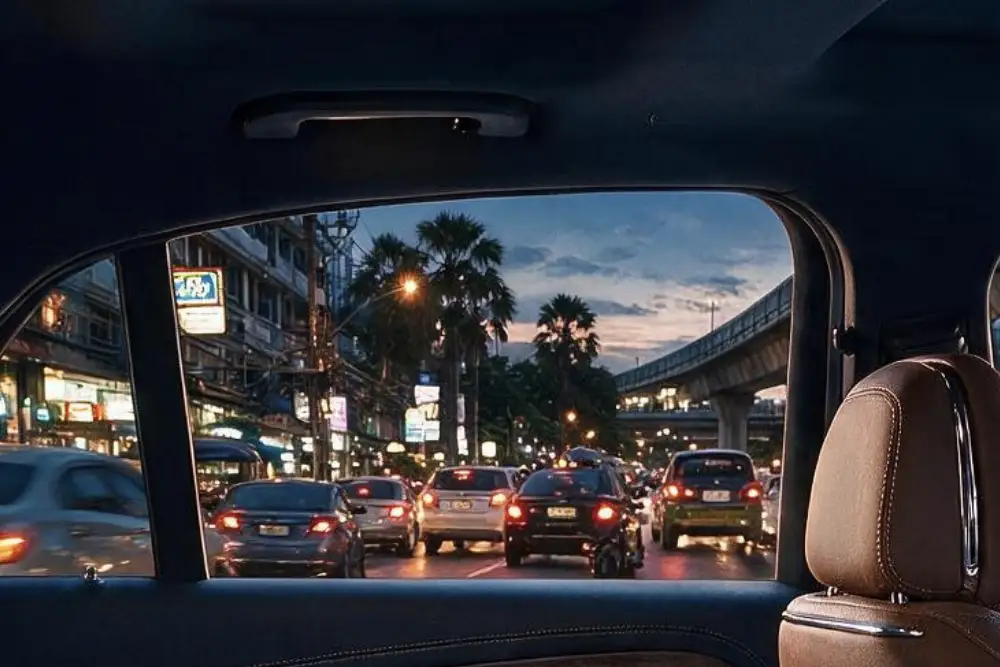
But the moment you have a group of 10 or more people, multiple destinations across one night, a table release window at a club, and Bangkok traffic doing what Bangkok traffic does at midnight on a Saturday, Grab stops being a solution and starts being part of the problem.
Here is what coordinating large group transport in Bangkok actually looks like when it is done properly.
The difference between 4 people and 15
Moving a group of 4 in Bangkok is simple. One driver, one vehicle, one WhatsApp message.
Moving a group of 15 is a different operation. Multiple vehicles, multiple drivers, split communication lines, and a group of people who all have different ideas about when they are ready to leave. The logistics do not get harder in a linear way. They get harder fast.
The single biggest difference is not the vehicles. It is communication. Every driver needs to receive the same information at the same time. Every change of plan needs to reach every vehicle simultaneously. A group that splits across three vans and tries to coordinate through individual WhatsApp messages will spend half the night waiting for each other.
The way we handle it: one WhatsApp group, all drivers in it, and one nominated person per vehicle we call the captain. That person is the point of contact for their vehicle. They relay timing changes, destination updates, and pickup calls without the whole group needing to be involved in the logistics conversation.
How we build the vehicle plan
Before any booking is confirmed, we need to understand three things: the size of the group, the level of comfort you are looking for, and how you expect the evening to flow.
We rarely recommend putting a large group into a single vehicle simply because it becomes much harder to manage arrival and departure when everyone is tied to one timetable. Two vehicles give you flexibility. If part of the group wants to leave a venue early, one vehicle can move while the other stays. That flexibility is worth more than the cost of the extra vehicle.
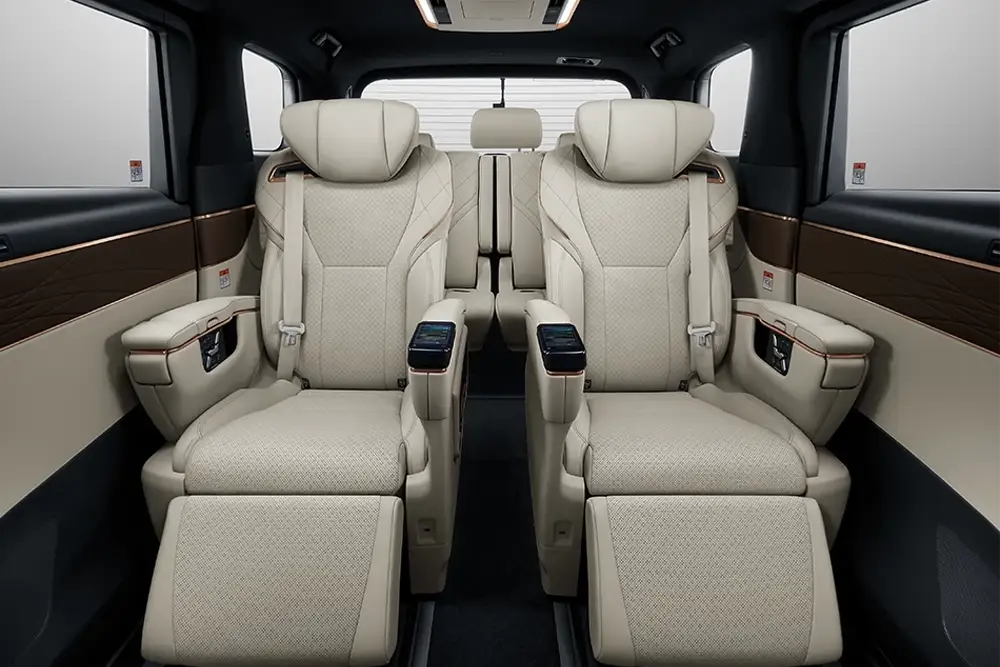
For a group of 10, a single Mercedes Sprinter 419 CDI handles it in either 8 or 9 seater VIP configuration. This is not a standard minibus. The Sprinter 419 CDI features full electric VIP captain seats, a scent diffuser, premium sound system, separated driver cabin, electric sliding doors with auto-obstacle detection, and a lane-keeping assist system with air suspension. It is designed for clients who value comfort as much as the destination.
For larger groups or those who want everyone in a single vehicle, we also have the Mercedes Sprinter in 12 and 14 seater configurations. Both are fitted to a luxury standard but with a different interior setup from the VIP 8 and 9 seater versions.
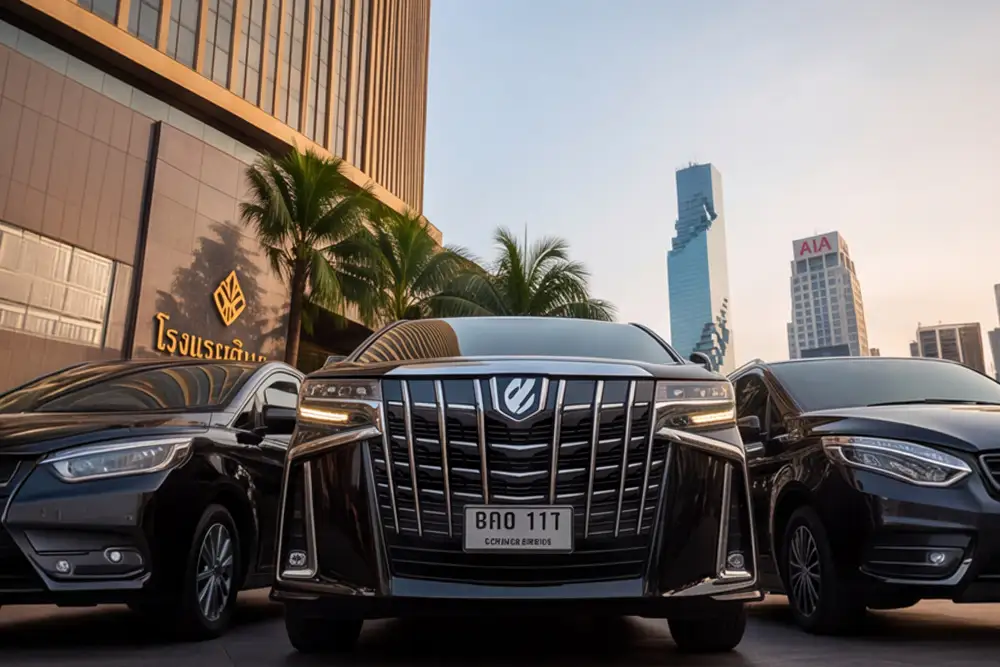
Two Toyota Alphards or Mercedes Benz Vitos give you the split-vehicle flexibility with a premium feel. The Toyota Commuter 10 seater is the standard option when budget is the priority.
For a group of 15, a single Mercedes Sprinter 14 seater keeps everyone together in one vehicle. Two Sprinter 8 or 9 seaters give you the split structure with the same premium feel. Two Alphards or Vitos work well if the group wants a more intimate vehicle. Two Toyota Commuters cover it at the standard level.
For a group of 20 or more, we build the fleet around the evening’s structure. Multiple Sprinters or a combination of Alphards and Vitos depending on how the group splits across venues and what arrival logistics the night requires.
Before the first vehicle moves
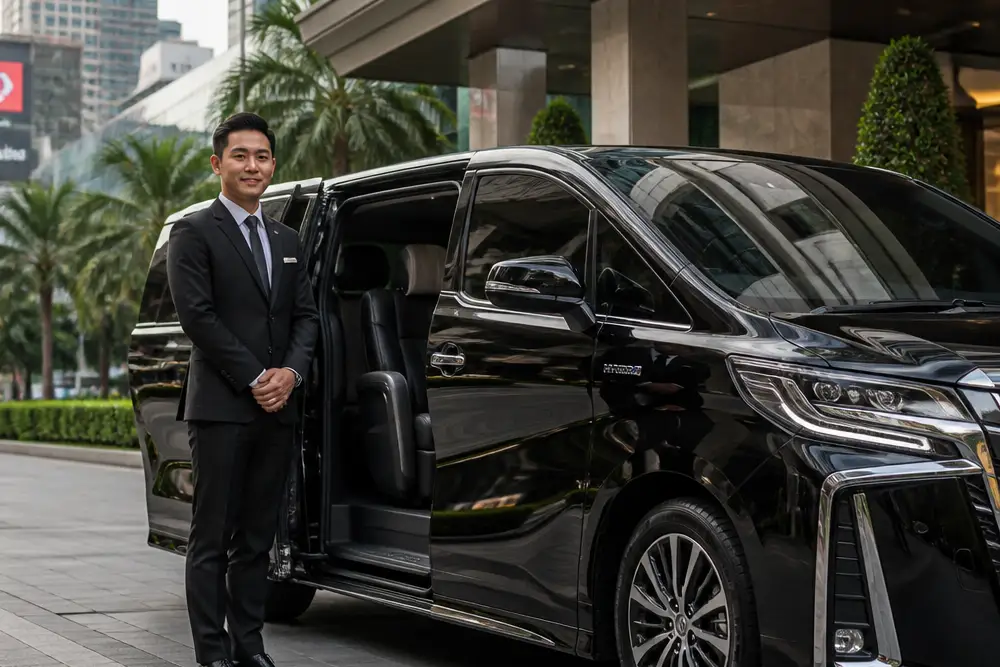
The evening briefing happens before anyone gets in a car. Every group transport booking is confirmed against a checklist that covers:
Pickup location for each vehicle. Pickup time. Destination order for the evening. Vehicle assignments by passenger group. Captain name per vehicle. Driver name and contact per vehicle.
Every driver receives this information before they leave. Every captain has it on their phone. If something changes on the night, the update goes to the WhatsApp group and everyone has the new information within seconds.
This is the part most groups skip when they try to organise themselves. They agree on the destination but not on who is in which car, what time the pickup is, or what happens if the plan changes. That is where the evening starts to fracture.
What we recommend and why
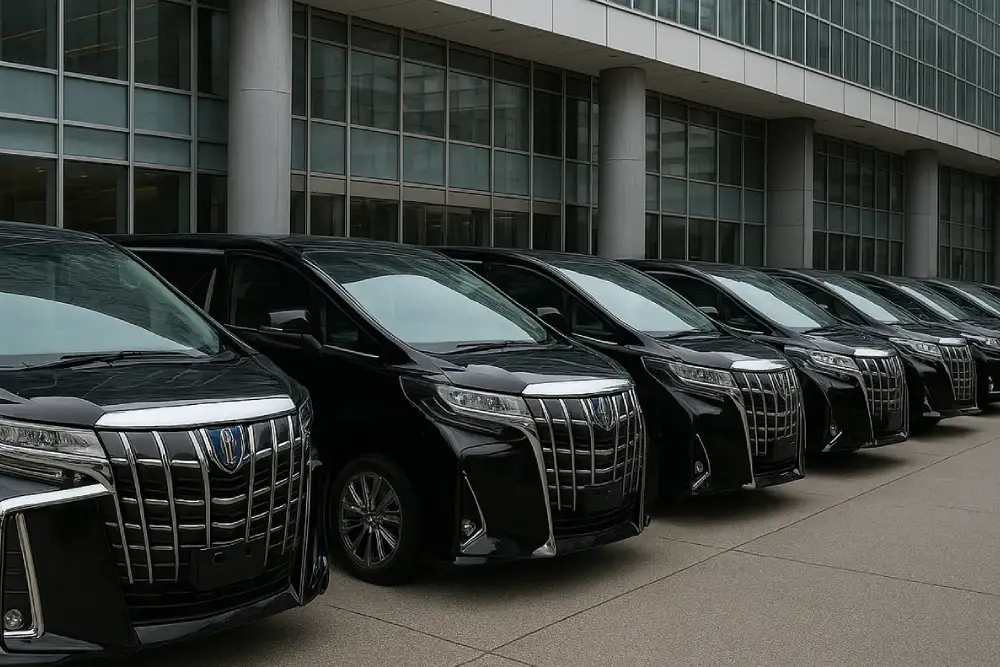
For a group night out in Bangkok, the Toyota Alphard is the default recommendation. It moves easily through Bangkok traffic, fits four to five people comfortably, and handles most drop-off points without issue.
If the group wants something closer to business class on wheels, the Mercedes Sprinter 419 CDI is the answer. Available in 8 or 9 seater VIP configuration, it is our first recommendation for clients who value comfort as much as the destination.
The party bus is a different proposition entirely. The comfort level is standard but the atmosphere is at its maximum. Music, space to move around, a setup built for a group that wants to start the evening before they arrive anywhere. It is the right choice when the journey is part of the experience, not just a way to get from one venue to the next. Some groups combine this with Thai models joining partway through the ride.
We can also split vehicle types across the same group on the same night. Half the group in an Alphard, the other half in a party bus. The coordination works as long as the communication structure is in place before departure.
The Grab problem nobody talks about
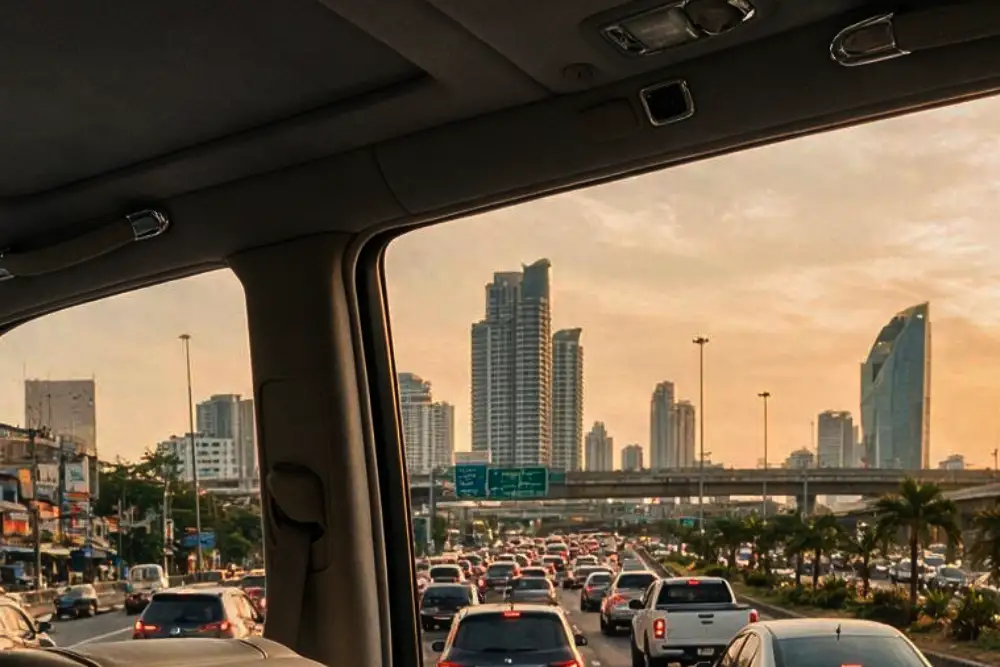
When a club finishes at 2am on Sukhumvit and 100 people walk out at the same time all opening Grab simultaneously, the surge pricing reacts immediately. Prices climb. Wait times stretch. Drivers cancel.
A group of 10 trying to self-organise at that moment is looking at four or five separate Grab rides, with surge pricing easily doubling or tripling the normal fare during peak hours. Multiply that across five cars and you are spending more than a properly booked vehicle would have cost, with none of the coordination.
There is also the taxi situation. When clubs close, rows of taxi drivers are already positioned along the road. Grab and street taxis do not mix well in that environment. The confusion adds to the chaos.
A driver who is already parked nearby, already in the WhatsApp group, and already waiting for the captain to send the pickup message is not affected by any of that.
Bangkok traffic: what your driver already knows
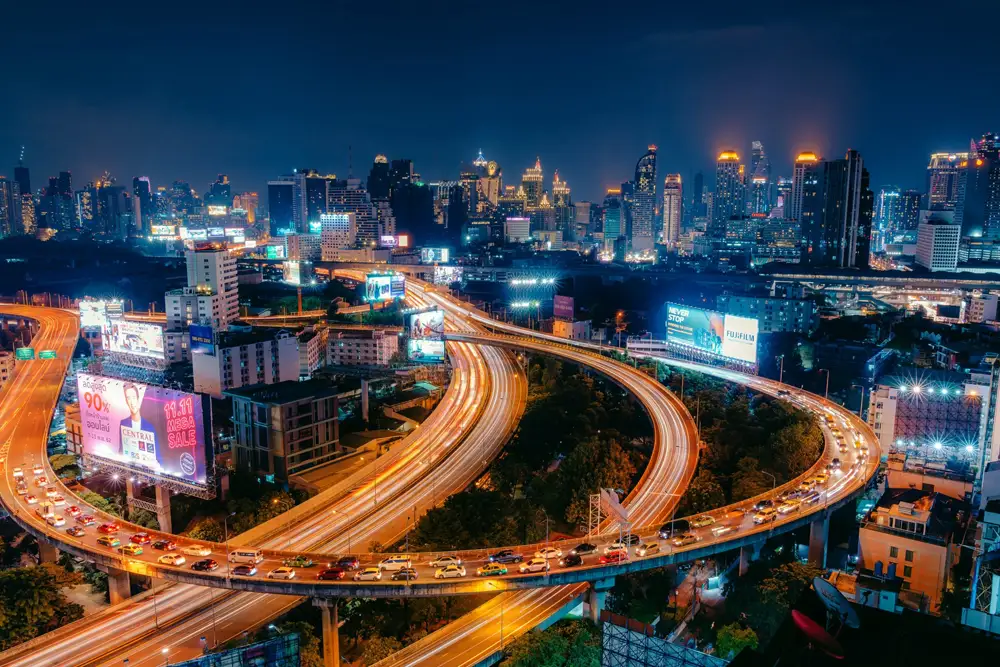
Three things matter more than anything else for group transport in Bangkok.
The first is route selection by time of day. The road that takes 10 minutes at 8pm can take 45 minutes at midnight depending on where the clubs are emptying. Our drivers know which routes to use and when.
The second is avoiding the obvious traps. Nana Soi 4 is a classic example. It looks like a direct route. It regularly becomes a bottleneck that adds significant time to any journey. A driver unfamiliar with Bangkok will follow the GPS. Our drivers do not.
The third is cluster planning. When a group has multiple stops across one evening, we map the destinations in order of proximity rather than convenience. A client we work with regularly flies in from Phuket to visit suppliers across Bangkok. Before he sets his meetings he sends us the venues. We calculate the most efficient order, the expected travel time between each one, and the buffer needed to get back to his hotel at the end of the day. He arrives at every meeting on time without spending the day in traffic.
The venue problem: Ekkamai and table release windows

The clubs in Ekkamai are consistently the most difficult for group arrivals. The area has limited drop-off options, the streets narrow quickly, and a group arriving in multiple vehicles needs a plan that accounts for the fact that not everyone will arrive at the same time.
Salone has a specific rule that applies to every booking. VIP tables must be occupied by 9:30pm or the management has the right to reassign the table regardless of whether a deposit has been paid. For groups arriving from dinner or another venue, that window creates real pressure.
The way we handle it: one of our team goes to the venue ahead of the group, sits at the table, orders drinks, and holds the space until the clients arrive. The table is secure. The group arrives when they arrive.
Most groups do not know that rule exists until they have already lost a table.
When the plan changes on the night
Group plans change. A venue closes early. Someone wants to add a stop that was not on the original itinerary. Half the group decides to stay and half wants to leave.
A soi near Sukhumvit 11 illustrates the kind of problem that comes up. A party bus cannot physically access that road. The solution: a van picks the group up from their location, brings them to the main road where the bus is waiting, and the transfer happens at the intersection. The bus stays in circulation rather than blocking the soi, and the group loses five minutes rather than the evening.
That kind of adaptation requires a driver who is reachable, a coordinator who is monitoring the situation, and a WhatsApp group where everyone is getting the same update at the same time.
What happens when there is no coordination
One group contacted us just after midnight after trying to coordinate twelve people with Grab. Three cars had cancelled, two drivers went to the wrong pickup point, and part of the group ended up at a different venue. We took over the transport for the rest of the evening using two vehicles, assigned captains, and one WhatsApp group. The evening continued as planned.
The vehicles were the same type they could have booked on Grab. The difference was the structure around them.
What you are actually booking
When you book group transport with Jetset Bangkok you are not booking vehicles. You are booking a communication structure that keeps multiple drivers, multiple vehicles, and a group of people moving in the same direction at the same time.
The vehicles are the easy part. Bangkok traffic, venue logistics, timing windows, and last-minute changes are where things go wrong for groups that try to handle it themselves.
We have moved groups of 4 and groups of 24. The process is the same at every scale. Clear vehicles, clear drivers, clear captains, one WhatsApp group, and everyone knowing the plan before the first car moves.
If your group is arriving from overseas, read our guide on how we handle VIP airport arrivals in Bangkok, and consider pairing it with airport fast track if the group wants to skip the immigration queue entirely. If you are considering a helicopter transfer between cities, our helicopter transfer guide covers what is actually possible in Thailand.
Contact us to discuss your group size and itinerary. We will build the right vehicle plan before you arrive.
Frequently asked questions
What is the minimum group size for organised group transport?
We handle transport for groups of any size, but the coordination structure becomes particularly valuable from 8 to 10 people upwards. Below that, a single Alphard or Vito usually covers it without needing multiple vehicles.
Can we mix vehicle types across the same group?
Yes. A common setup is part of the group in a luxury van and part in a party bus. As long as the communication structure is in place, mixed fleets work well.
How far in advance do we need to book?
For a single vehicle, 24 to 48 hours is usually sufficient. For larger groups with multiple vehicles, earlier is better. Peak nights like New Year’s Eve and Songkran require advance booking as vehicle availability drops quickly.
Do your drivers speak English?
The coordinator in the WhatsApp group speaks English. For drivers where language is a concern, we brief them in Thai on all destination and timing details before departure so nothing depends on the client having to explain it on the night.
What happens if the plan changes during the night?
All changes go through the WhatsApp group. Every driver receives the same update at the same time. If a venue changes or a stop is added, we adjust the vehicle positions accordingly.
Is Grab not enough for a group?
Grab works well for individual transfers. For a group moving across multiple venues in one night, particularly during peak hours or at closing time, the combination of surge pricing, cancellations, and split vehicles creates problems that a pre-booked coordinated fleet avoids entirely.
What vehicles do you use for large groups?
Premium options include the Mercedes Sprinter 419 CDI in 8 or 9 seater VIP configuration, 12 and 14 seater luxury configurations, Toyota Alphard, and Mercedes Benz Vito. Standard option is the Toyota Commuter 10 seater. For groups that want a party atmosphere en route, we also arrange party buses. The right vehicle depends on group size, comfort preference, and the nature of the evening.